



Why Is My Period Late? 9 Common Reasons and When to Test
How late can a period be before it's considered late?
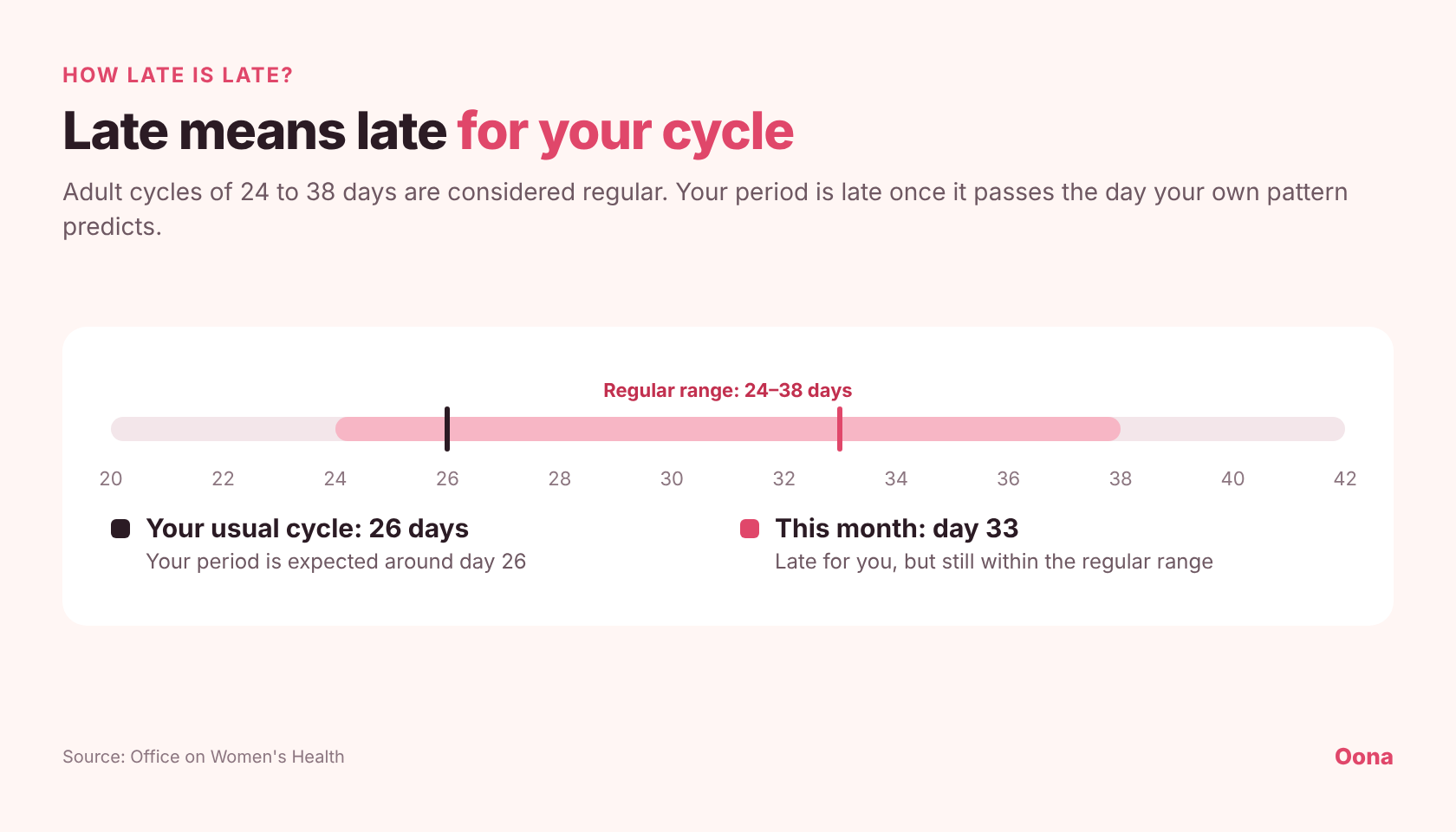
Your period is late once it is past the day your own cycle pattern predicts. There is no single number of days that applies to everyone, because cycle length differs from person to person.
The Office on Women's Health describes cycles of 24 to 38 days as regular for adults. If your cycle is usually 26 days and this month it reaches 33, your period is late for you, but the cycle is still within the regular range. If your cycles are often shorter than 24 days or longer than 38, that pattern is worth discussing with a doctor.
Could I be pregnant? When to take a pregnancy test
If you have had sex since your last period, take a home pregnancy test. These tests detect hCG (human chorionic gonadotropin), a hormone made after a fertilized egg implants.
The FDA explains that in a 28-day cycle, hCG can be detected in urine 12 to 15 days after ovulation. Testing too early can give a false negative. For the most reliable result, the FDA suggests testing one to two weeks after a missed period and using first-morning urine.
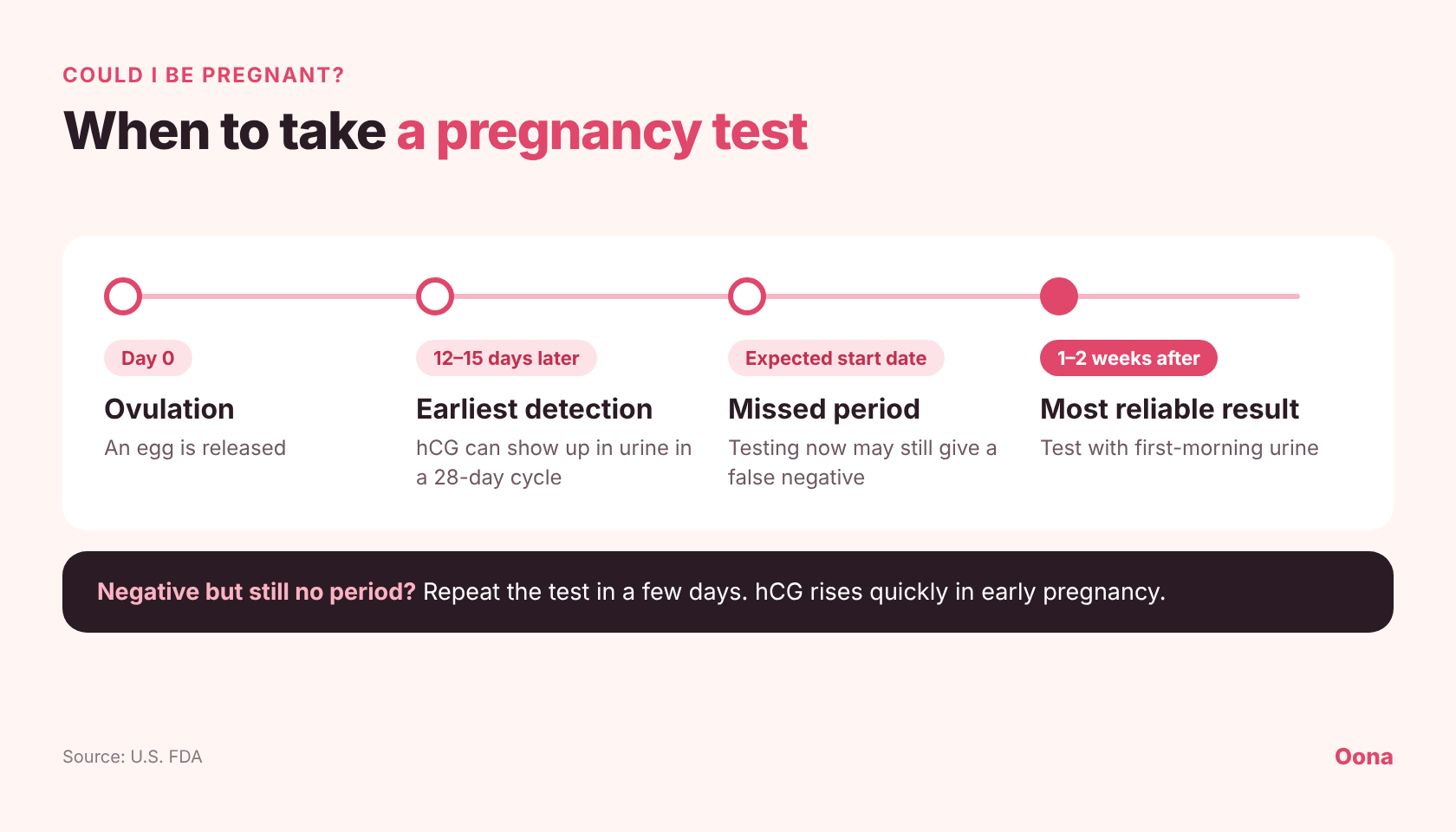
If the test is negative and your period still hasn't come, repeat the test in a few days. hCG levels rise quickly in early pregnancy, so a later test may show a different result.
What else can make your period late?
When pregnancy is ruled out, these are the most common causes of a delayed or missed period. Several of them are listed by the NICHD as causes of amenorrhea.
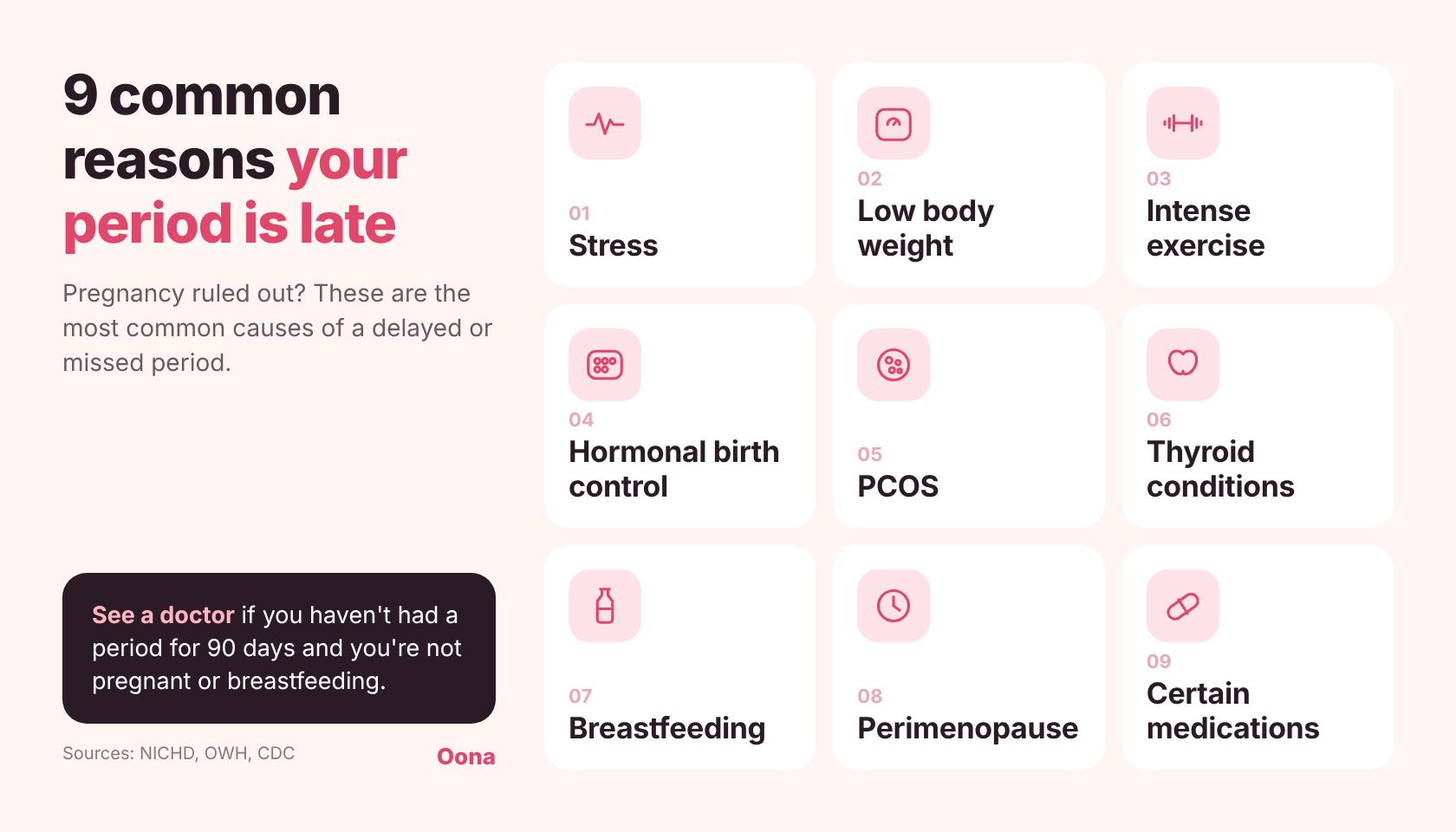
1. Stress
Emotional stress can temporarily disrupt the hormones that trigger ovulation. If ovulation happens later than usual, your period also comes later.
2. Weight loss or low body weight
Low body weight and a low percentage of body fat can pause ovulation. This includes weight loss from dieting or illness.
3. Intense exercise
Training that burns more calories than you take in through food can stop periods. The NICHD lists this as a common cause of hypothalamic amenorrhea.
4. Hormonal birth control
Some birth control pills, injectable contraceptives and hormonal IUDs can make periods lighter, irregular or absent. After you stop hormonal contraception, it can take time for your cycle to return to its own rhythm.
5. Polycystic ovary syndrome (PCOS)
PCOS is a hormonal condition that often causes irregular or missed periods. In a CDC survey from 2022–2023, 8.7% of U.S. women aged 20 to 49 had ever been diagnosed with PCOS.
6. Thyroid conditions
Both an overactive and an underactive thyroid can cause menstrual irregularities, including missed periods (NICHD). A simple blood test can check thyroid function.
7. Breastfeeding
Breastfeeding can delay the return of periods after giving birth. This is a normal, physiological cause.
8. Perimenopause
Perimenopause is the transition before menopause. It usually begins between ages 45 and 55, and periods can become irregular, shorter, longer, lighter or heavier.
9. Certain medications
Some antidepressants and blood pressure medications can affect your cycle (NICHD). Don't stop a prescribed medication on your own - talk to the doctor who prescribed it.
Late period vs missed period: what's the difference?
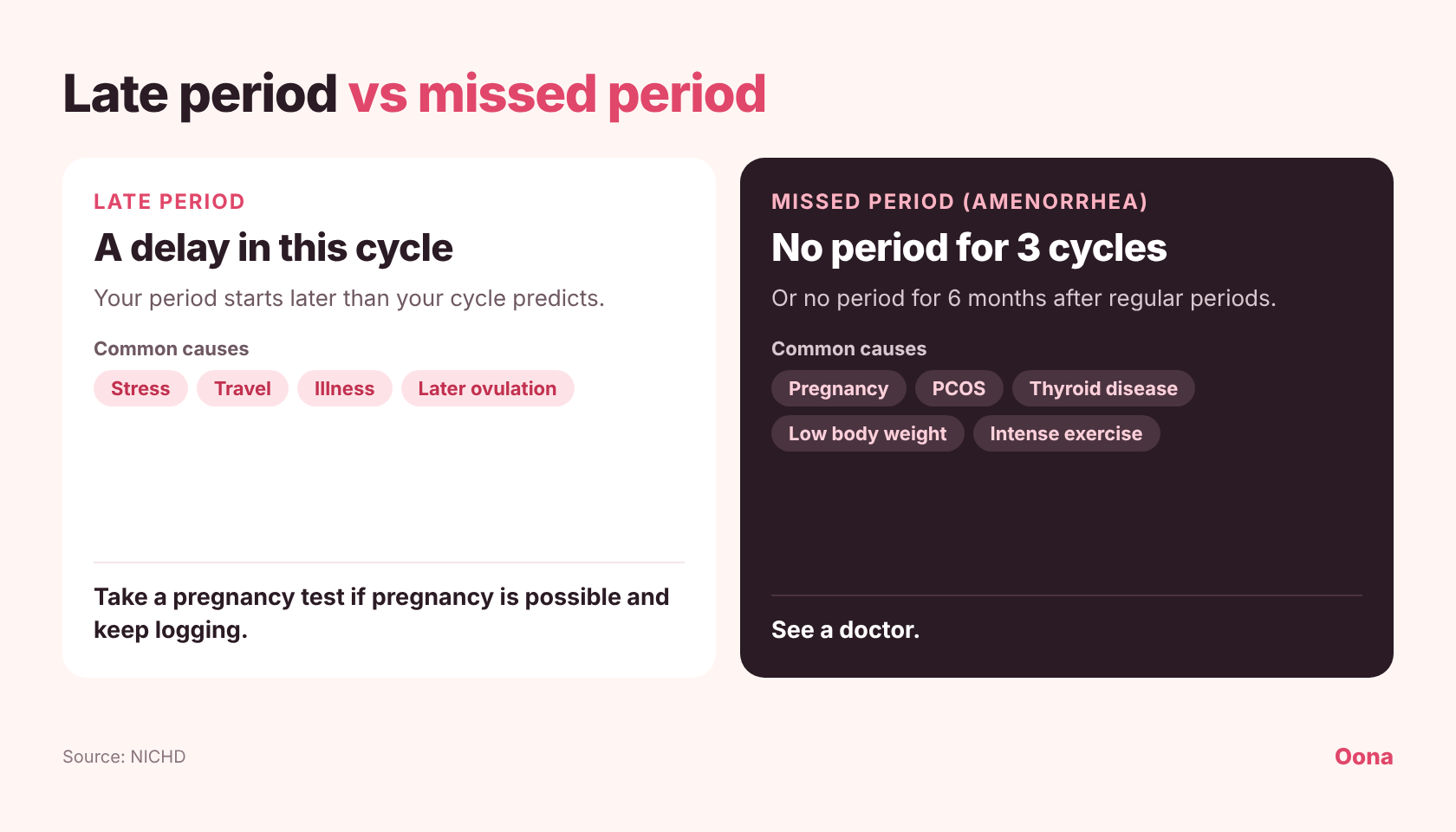
- Late period: your period starts later than your cycle predicts. Common causes are stress, travel, illness or a later ovulation. Take a pregnancy test if pregnancy is possible and keep logging.
- Missed period (amenorrhea): no period for three cycles in a row, or for 6 months after regular periods (NICHD). Common causes include pregnancy, PCOS, thyroid disease, low body weight and intense exercise. See a doctor.
When to see a doctor about a late period
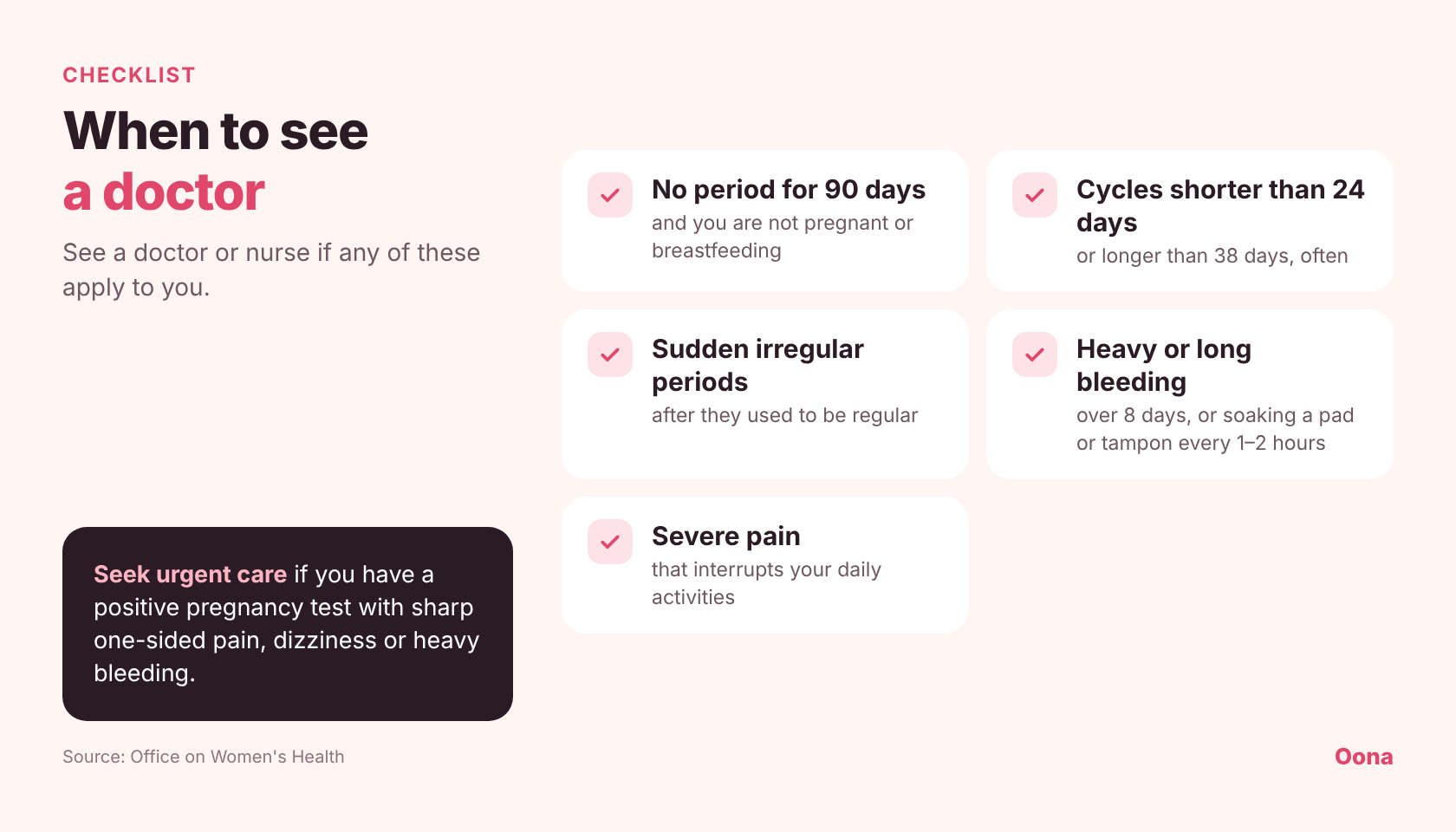
The Office on Women's Health recommends seeing a doctor or nurse if:
- You haven't had a period for 90 days and you are not pregnant or breastfeeding
- Your cycles are often shorter than 24 days or longer than 38 days
- Your periods suddenly become irregular after being regular
- You have bleeding that lasts longer than 8 days or soaks a pad or tampon every 1–2 hours
- You have severe pain that interrupts your daily activities
Seek urgent care if you have a positive pregnancy test with sharp one-sided pain, dizziness or heavy bleeding.
How tracking helps you understand a late period
A late period is easier to read when you know your own pattern. In Oona - Period Tracker & Calendar, log the first day of each period and the app calculates your average cycle length and predicts the next start date. When a period runs past that date, you can see at a glance how late it is compared with your previous cycles.
Log symptoms, stress, illness and travel alongside your period. Over a few months these notes show what tends to come before a delay. If you see a doctor, you can share your cycle history instead of relying on memory.
Oona is a tracking app. It is not a contraceptive method and not a diagnostic tool.
Sources
- Your menstrual cycle — Office on Women's Health (HHS)
- Pregnancy (home use tests) — U.S. Food and Drug Administration
- What causes amenorrhea? — NICHD (NIH)
- Endometriosis, Polycystic Ovary Syndrome, and Uterine Fibroids in Women Ages 20–49: United States, 2022–2023 — National Center for Health Statistics (CDC)
- What is menopause? — National Institute on Aging (NIH)