



PMS Symptoms: What's Normal Before Your Period and What Helps
What is PMS?
Premenstrual syndrome (PMS) is a group of physical and emotional symptoms that appear in the days before a period and ease after it starts. According to the Office on Women's Health, symptoms typically begin a week or two before the period.
For a diagnosis, symptoms usually occur in the five days before your period for at least three cycles in a row and end within four days after the period starts.
What are the most common PMS symptoms?
Symptoms differ from person to person and can change over the years.
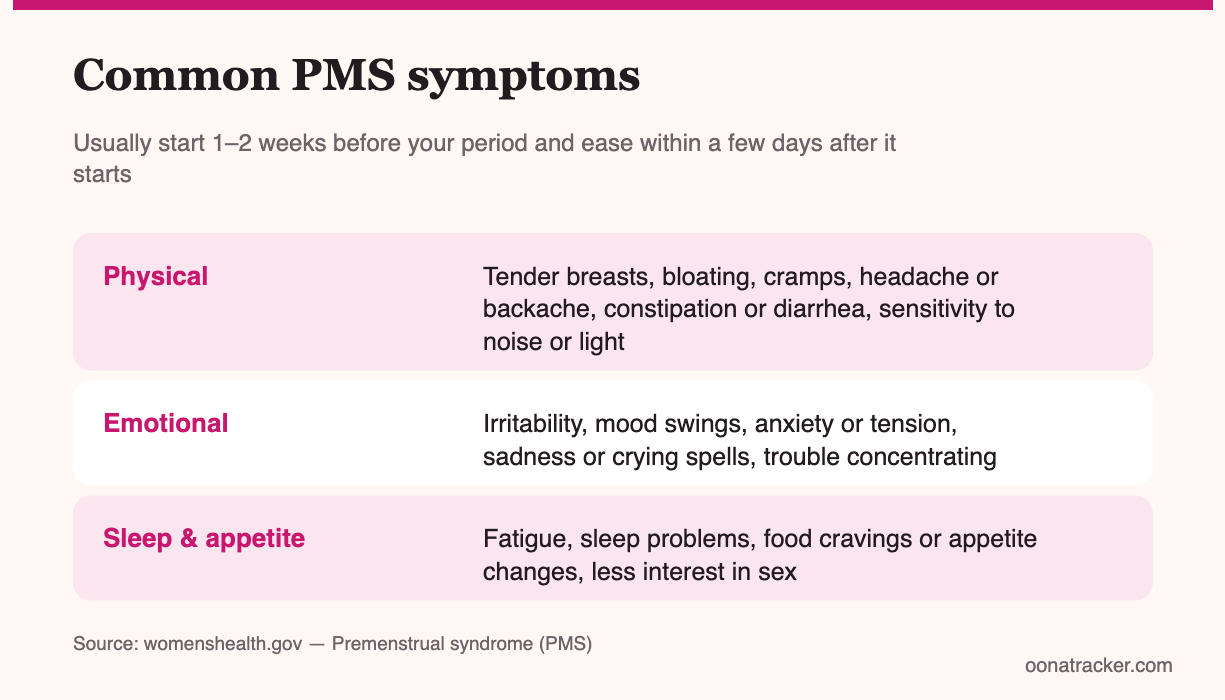
Physical symptoms
- Swollen or tender breasts
- Bloating or a gassy feeling (why bloating happens)
- Cramping, headache or backache
- Constipation or diarrhea
- Lower tolerance for noise or light
Emotional and mental symptoms
- Irritability, tension or anxiety
- Mood swings, sadness or crying spells (mood across your cycle)
- Trouble concentrating or remembering
- Fatigue, sleep problems and food cravings
How common is PMS?
Over 90% of women say they get some premenstrual symptoms, and as many as three in four report PMS at some point in their lives (Office on Women's Health). PMS is most common in people in their 30s, and symptoms may get worse in the late 30s and 40s as perimenopause approaches.
What is the difference between PMS and PMDD?
Premenstrual dysphoric disorder (PMDD) is a more severe form of PMS. Its emotional symptoms, such as depression, anxiety or anger, are strong enough to disrupt work, school or relationships. Less than 5% of women of childbearing age have PMDD (womenshealth.gov). It is treatable, so talk to a doctor if this sounds familiar.
What helps PMS symptoms?
Lifestyle steps and over-the-counter medicines help many people.
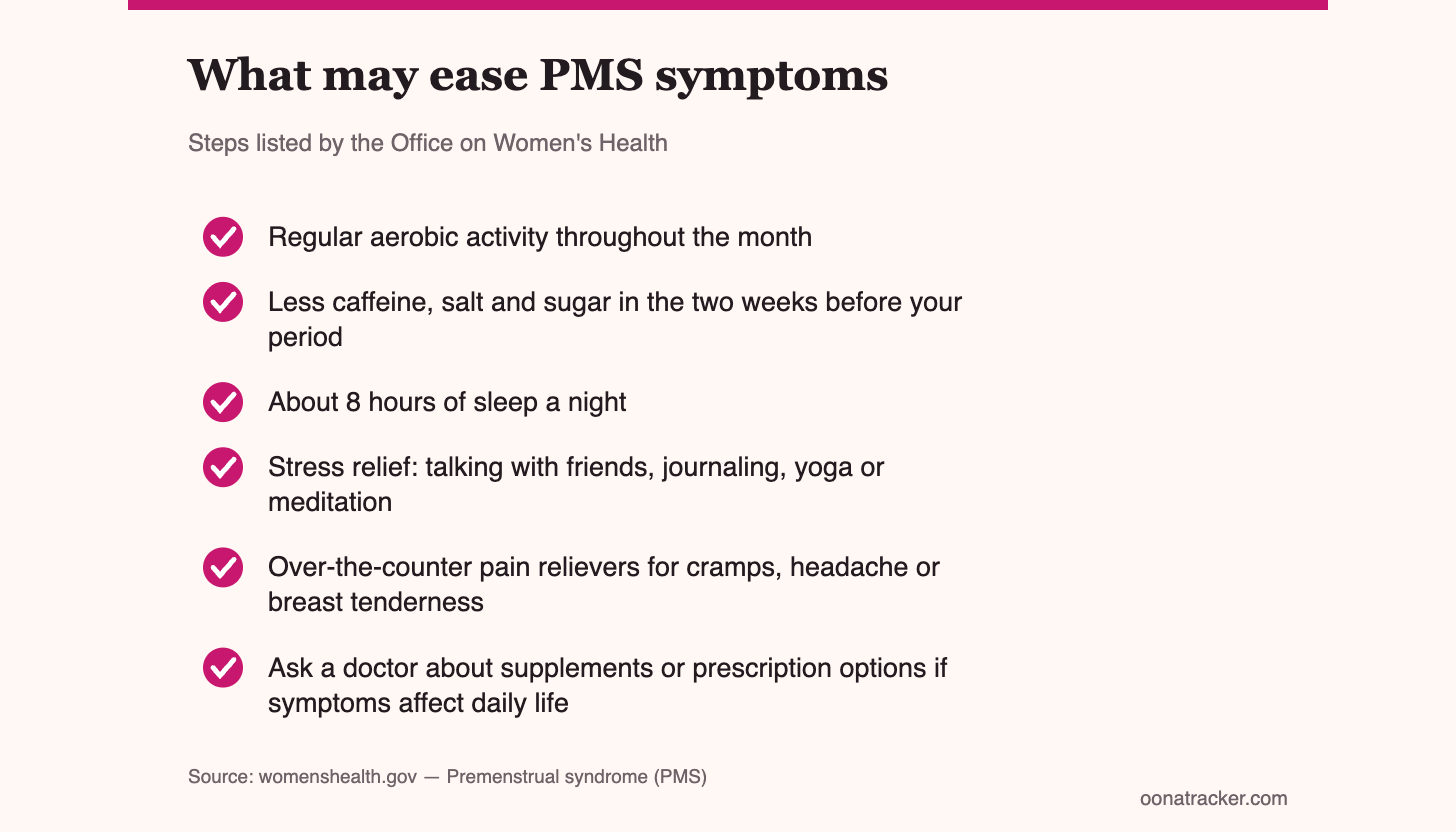
- Get regular aerobic activity throughout the month.
- Limit caffeine, salt and sugar in the two weeks before your period.
- Aim for about eight hours of sleep a night.
- Use stress relief that works for you, such as talking with friends, journaling, yoga or meditation.
- Ibuprofen, naproxen or aspirin may ease cramps, headaches, backaches and breast tenderness.
If these don't help, a doctor may suggest hormonal birth control, an SSRI antidepressant for emotional symptoms, or a diuretic for bloating. Calcium and vitamin B6 may help some symptoms; talk to a doctor before starting any supplement (womenshealth.gov).
When to see a doctor about PMS
See a doctor or nurse if your symptoms bother you or affect your daily life. There is no single test for PMS: diagnosis is based on your symptom history, so a few months of daily notes are the most useful thing you can bring.
Get help right away if you have thoughts of harming yourself.
How tracking helps with PMS
Tracking shows whether your symptoms follow your cycle — the key question in diagnosing PMS. In Oona — Period Tracker & Calendar, log symptoms and mood each day. After two or three cycles you can see which days they cluster on and when they ease, and share that history with your doctor.
Oona is a tracking app. It is not a contraceptive method and not a diagnostic tool.
Sources
- Premenstrual syndrome (PMS) — Office on Women's Health (HHS)
- Your menstrual cycle — Office on Women's Health (HHS)