



Period Cramps: Causes, Relief and When Pain Isn't Normal
Why do period cramps happen?
During a period, the uterus contracts to shed its lining. These contractions cause the cramping pain known as primary dysmenorrhea, the most common type of period pain (Office on Women's Health).
Pain is the most common period problem: more than half of women who have periods report some pain around their period.
Is my period pain normal?
Cramps that start just before or during your period, last a few days and improve with over-the-counter pain relievers are typical. Pain that is severe, lasts longer, or happens outside your period may have another cause.
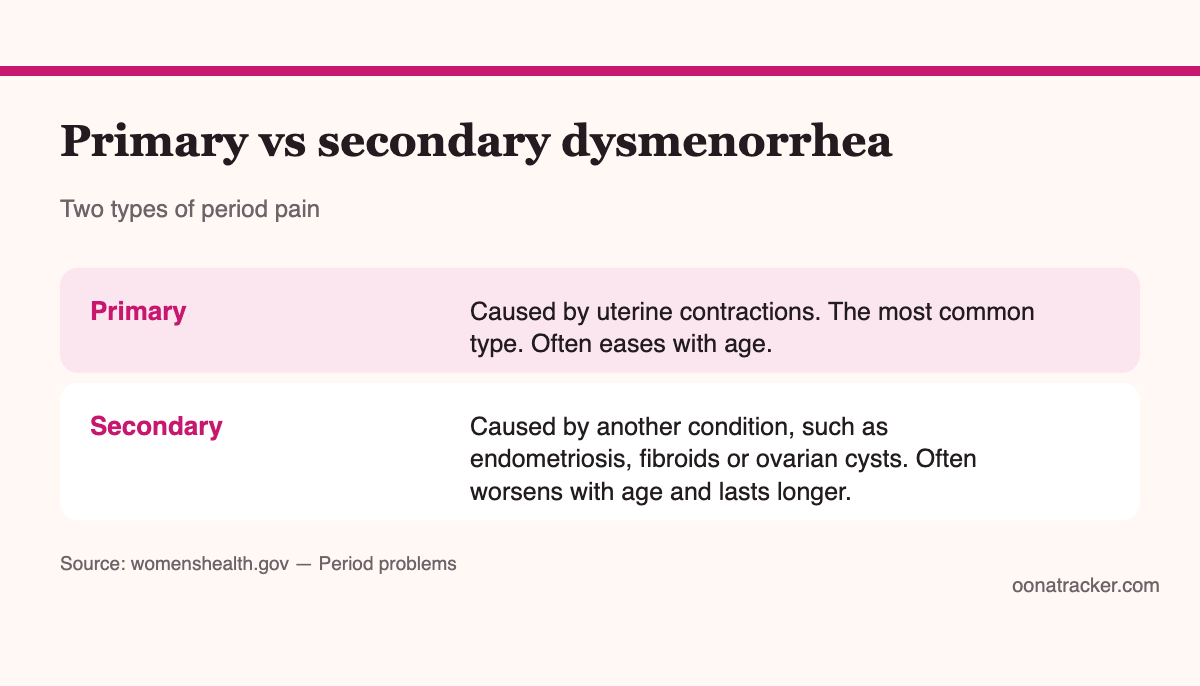
Primary dysmenorrhea
Caused by uterine contractions. It is the most common type and often eases with age. Risk factors include heavier or longer periods, smoking and high stress (womenshealth.gov).
Secondary dysmenorrhea
Caused by another condition. The pain tends to get worse with age and lasts longer than typical cramps. Common causes are:
- Endometriosis: tissue similar to the uterine lining grows outside the uterus
- Uterine fibroids: non-cancerous growths in or on the uterine wall
- Ovarian cysts: fluid-filled sacs that can cause pain during periods or ovulation
What helps period cramps?
Most period pain responds to simple steps.
- NSAIDs. Ibuprofen, naproxen or aspirin relieve most period pain (womenshealth.gov). MedlinePlus suggests starting the day before your period is expected and taking them regularly for the first few days.
- Heat. A heating pad on your lower belly, a warm bath or shower. Never fall asleep with a heating pad on.
- Movement. Walking, regular aerobic exercise and gentle pelvic rocking.
- Rest positions. Lying on your side with knees bent, or with legs raised.
- Relaxation. Meditation or yoga.
If these don't help, a doctor may suggest hormonal birth control or look for an underlying cause.
When to see a doctor about period pain
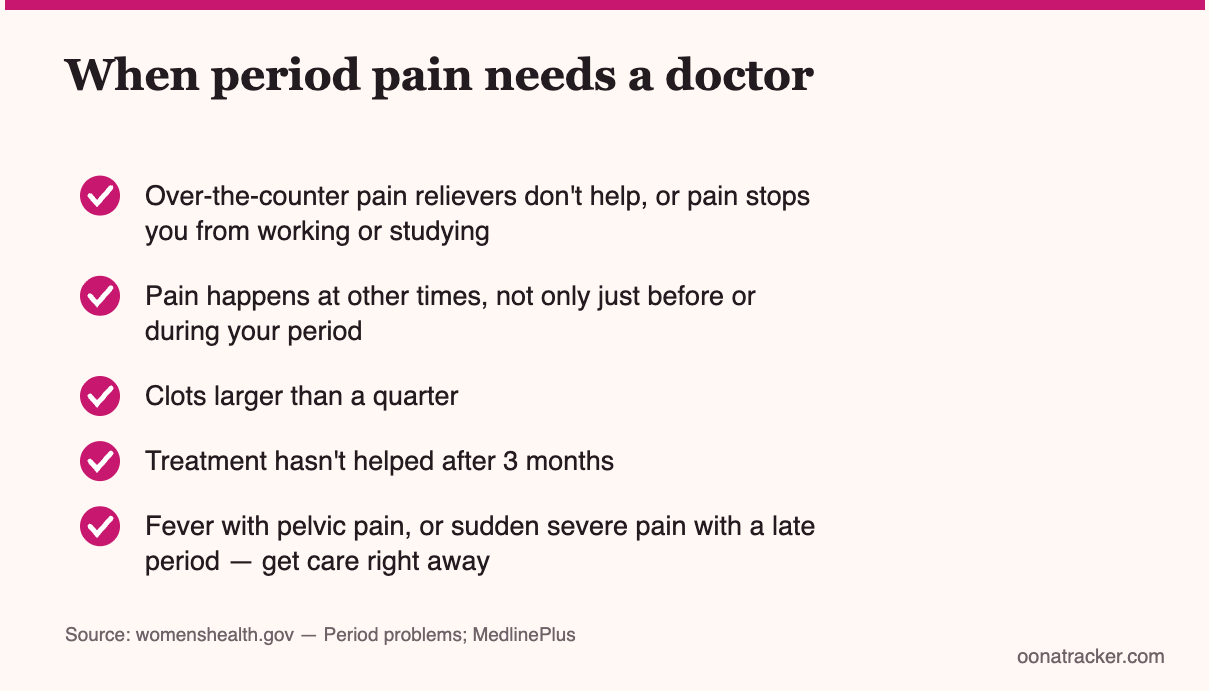
- Over-the-counter pain relievers don't help, or pain interferes with work or daily life
- Pain occurs at times other than just before or during your period
- You pass clots larger than a quarter
- Treatment hasn't helped after 3 months
- You have pain and had an IUD placed more than 3 months ago
Get care right away if you have fever with pelvic pain, foul-smelling discharge, or sudden severe pain when your period is more than a week late (MedlinePlus).
How tracking helps with period pain
Logging pain each day shows when it starts, how strong it is and whether it is changing over time. In Oona — Period Tracker & Calendar, rate cramps and note what helped. If pain is getting worse cycle after cycle, that history helps your doctor decide what to check.
Oona is a tracking app. It is not a contraceptive method and not a diagnostic tool.
Sources
- Period problems — Office on Women's Health (HHS)
- Painful menstrual periods — MedlinePlus (National Library of Medicine)